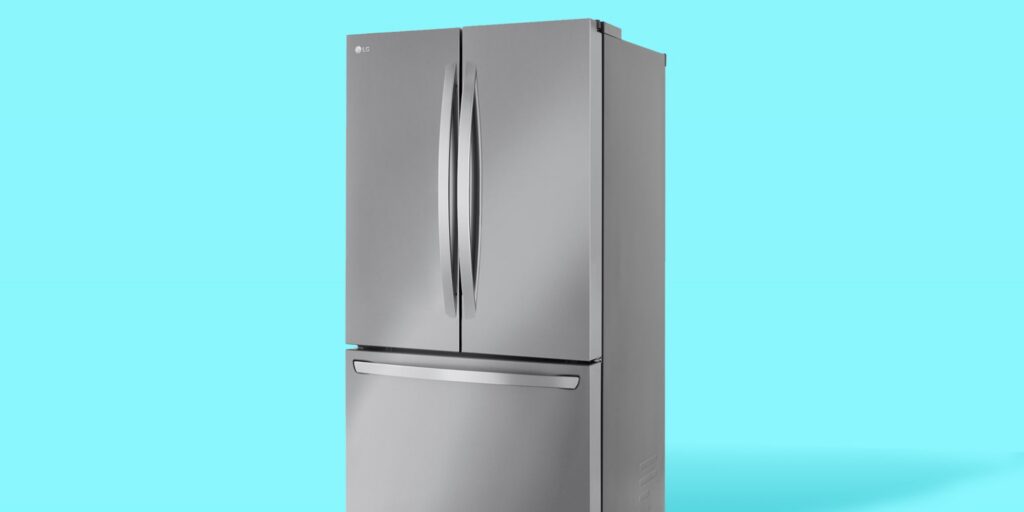
Two 36-inch refrigerators can hold the same volume of groceries but differ on whether a sheet pan fits. A French-door model has a full-width fresh-food compartment; a side-by-side divides that width between the fridge and freezer. Wirecutter’s November 24, 2026, refrigerator guide found that owner satisfaction tended to level off at about 20 cubic feet. Once you have enough capacity, shelf width, door clearance and the height of the food you reach for every day can help narrow the choice.
Measure the kitchen and the delivery route
Use the manufacturer’s specification sheet rather than relying on a retailer’s nominal width. Check the space under overhead cabinets, the clearance needed for airflow and how far the doors can swing. Measure the doorways and hallways the refrigerator must pass through, too.
Standard-depth refrigerators are typically 30 to 36 inches deep. If the fridge would project into a walkway, look at the depth with the doors and handles, not just the cabinet depth. A model marketed as counter-depth may have a 24-inch frame but extend several inches farther into the room. Wirecutter limited its counter-depth recommendations to models measuring less than 28 inches with the doors, excluding handles. A truly flush refrigerator is about 24 to 25 inches deep; few freestanding models are that shallow.
Choose the layout by what needs to be within reach
French-door: wide shelves behind narrow doors. Either half of the fresh-food compartment can be opened on its own, and opening both doors makes room for sheet pans and pizza boxes. Produce stays above knee level, but frozen food can get buried beneath the sliding shelves in the bottom drawer. Most models are 36 inches wide, and this is generally the most expensive freestanding style. Wirecutter favored the LG LRFLC2706, a quiet 36-inch model with an internal water dispenser and a freezer ice maker. Its runner-up, the GE GNE27J, has a larger footprint but offers a sliding shelf that makes room for tall bottles.
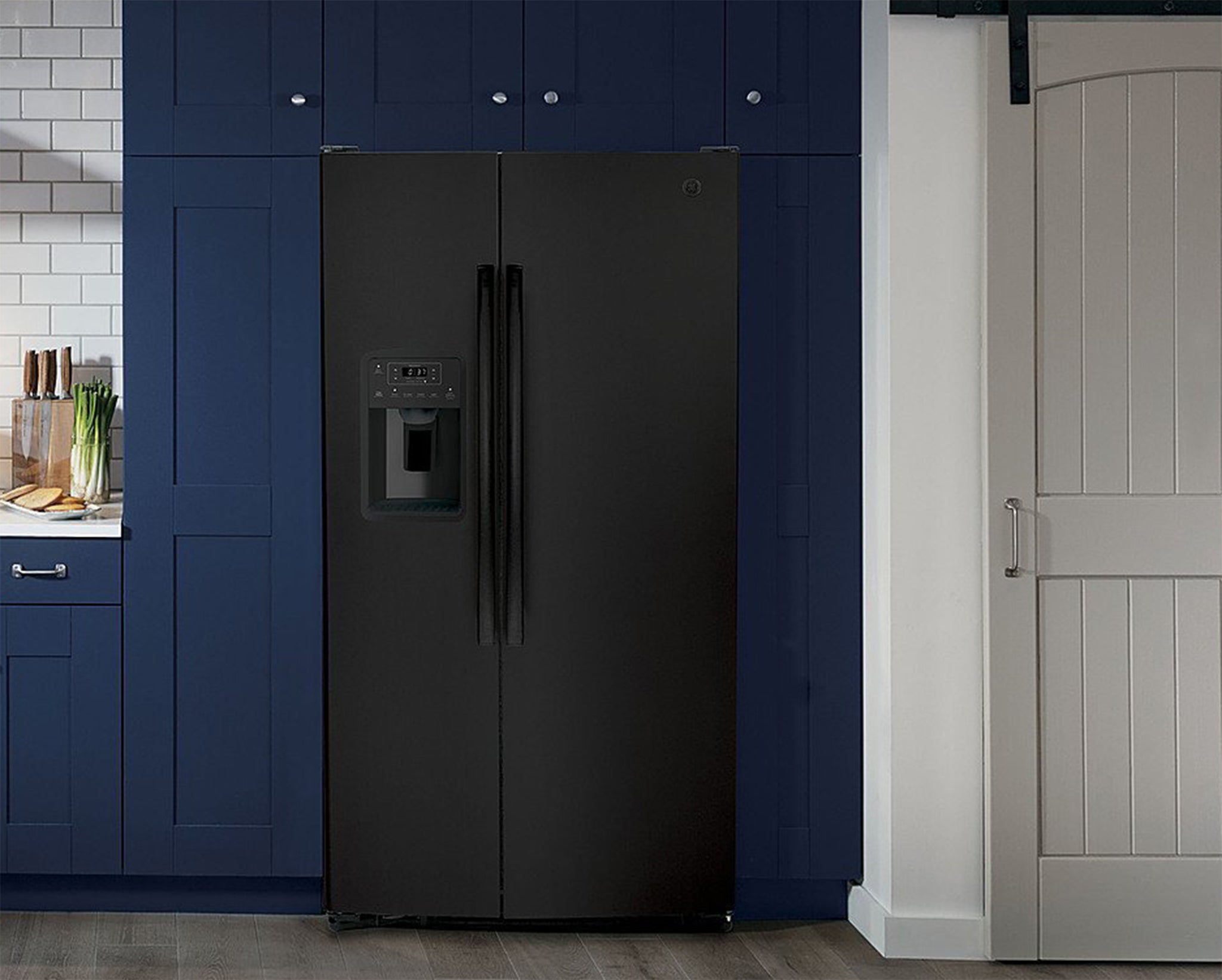
Side-by-side: easy-to-see freezer shelves, less room for wide dishes. The narrow doors need less swing space than a full-width door. Since both compartments run from top to bottom, frequently used fresh and frozen foods can sit at a comfortable height. The trade-off is shelf width: owners in Wirecutter’s surveys reported difficulty fitting casserole dishes and pizza boxes. Side-by-sides generally cost less than comparable French-door models but are the least energy-efficient layout. The GE GSE25G was the 36-inch pick for its adjustable interior and accessible freezer. The Whirlpool WRS315SNH forgoes both the ice maker and water dispenser, freeing up storage space.
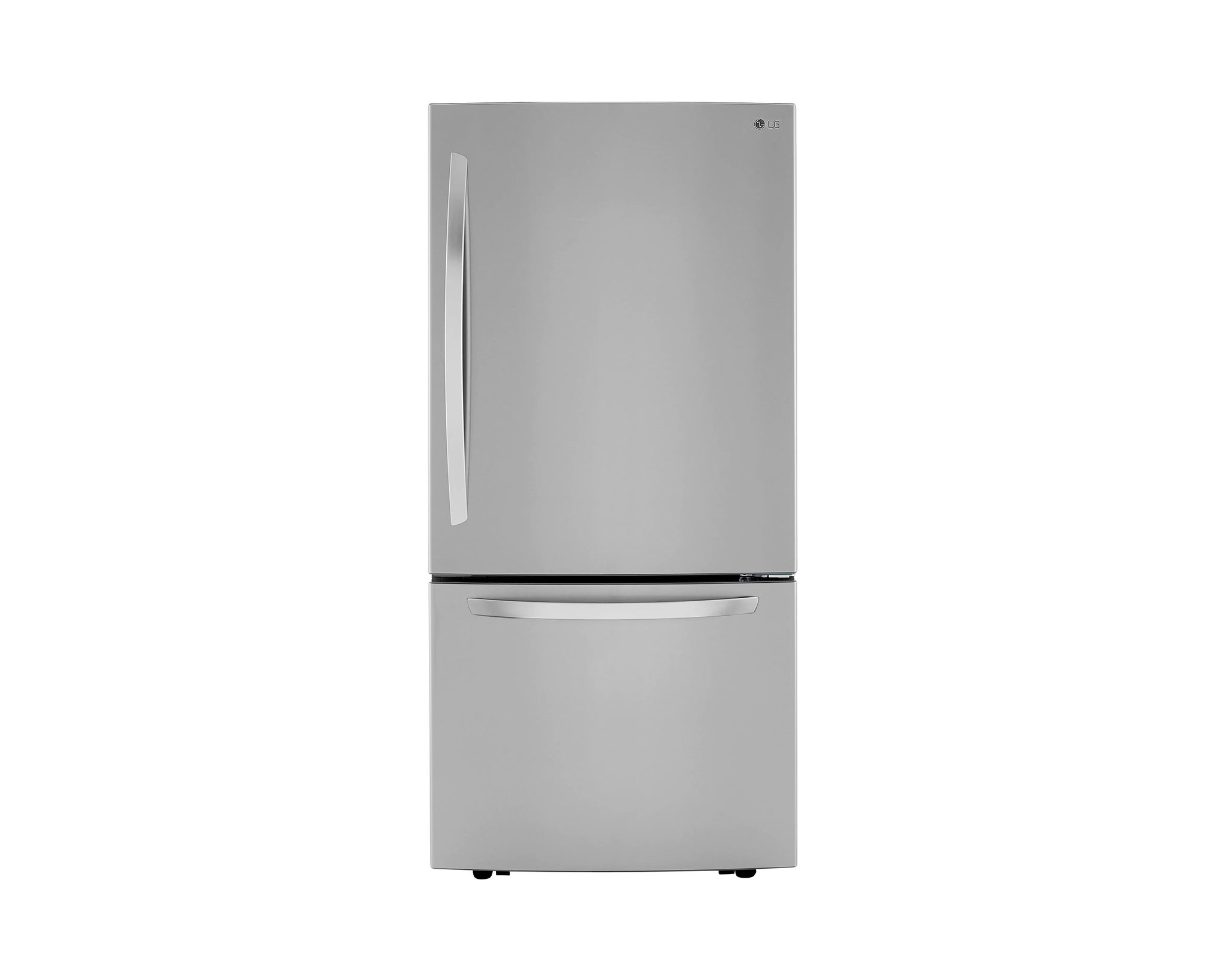
Single-door bottom-freezer: full-width storage in a narrower opening. This layout keeps produce above knee height, even in kitchens with less than 34 inches of refrigerator width. It generally costs less than a French-door model, though the deep freezer presents the same challenge of finding food at the bottom. Bottom-freezer models had the highest owner satisfaction in Wirecutter’s reader surveys. The 33-inch GE GDE25EYKFS offers nearly 25 cubic feet and an internal water dispenser. The 30-inch Whirlpool WRB329DMB has nearly 19 cubic feet, a freezer shelf and an ice maker. Whirlpool also earned high marks for repairability in the guide’s research.
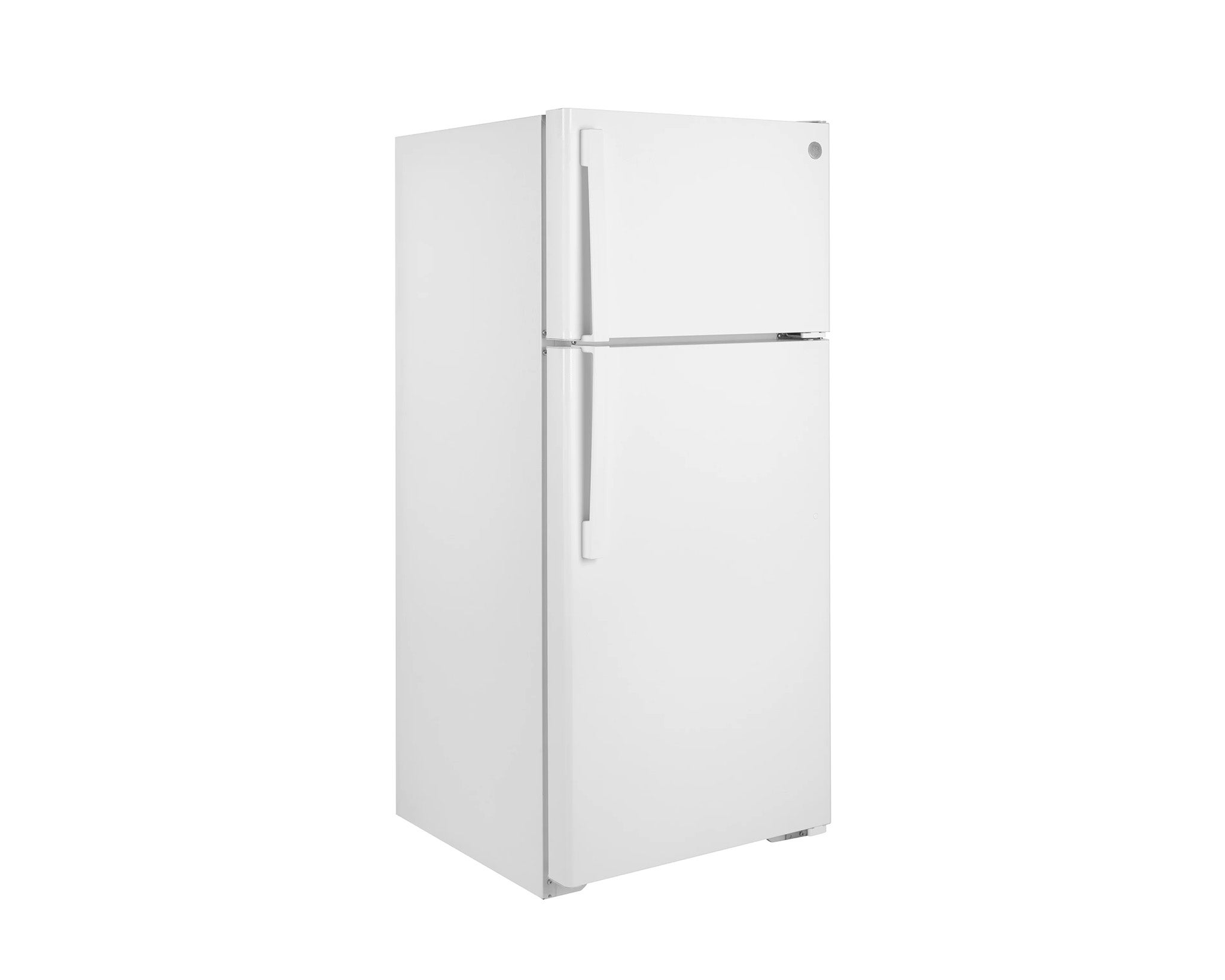
Top-freezer: lower cost and energy use, with produce down low. This layout is typically the most affordable and efficient. In Wirecutter’s 2023 reader survey, top-freezer owners reported the fewest service calls, repairs and replaced parts of any style. Check that you can comfortably reach both the freezer and the produce drawers at the bottom. The basic, 28.8-inch GE GTS17DTNR can accommodate an optional ice maker. The LG LTCS20020 was the mid-priced, Energy Star–certified alternative.
When the location narrows the choice
For a shallow kitchen, shorter shelves make food at the back easier to see, but they also hold less. Wirecutter reported that counter-depth models typically cost $2,000 to $5,000 more than standard-depth models of the same width. Its nearly counter-depth picks included the 36-inch French-door Fisher & Paykel Series 7 RF201ADJSX5, for which service may be slower in some areas, and the 31-inch bottom-freezer GE GBE17HYRFS, which has no ice maker.
For an unheated garage or cabin, check the appliance’s rated ambient temperature range. Most ordinary refrigerators are intended for rooms that stay roughly between 50°F and 100°F. Garage-ready models can cover 38°F to 110°F, but some have a lower limit of 45°F. The LG LHTNS2403, a large top-freezer model, is designed to work down to 38°F. The GE GTS22K was a smaller, less efficient alternative available in five finishes.
Decide which features are worth maintaining
An ice or water dispenser requires a water line, and most systems need a replacement filter about every six months. Dan Conrad, an appliance reliability and testing expert at Hussmann, identified ice makers and dispensers as a common point of failure. Placement matters, too: a through-the-door ice dispenser on a French-door fridge requires ice-making equipment in the fresh-food compartment, where it takes up shelf space.
Before buying, confirm who will install the refrigerator, connect any water line and remove the old appliance. A one-year parts-and-labor warranty is standard, and some manufacturers cover the compressor for longer. Check which local repair companies can get parts and service the specific model both during and after the warranty period.